
Planning & review

Sunday planning: 30 calm minutes that set up the week

The when and the feel of the ritual: why Sunday works, who it does not work for, the Sunday-shaped parts no other day has, and how to keep the Scaries out of it.

Aleem O'BalogunBy Aleem O'BalogunUpdated 6 min read

The short answer

Sunday planning is a short ritual, around 30 minutes, where you set up the week before it starts: close the open loops, run the planning pass, decide Monday's first move, and put one enjoyable thing in the week. Done on Sunday, Monday begins from a plan you chose. Done well, it makes Sunday evenings calmer, not shorter.

Steps

  1. 1

    Pick your Sunday moment, and protect it

    Late afternoon beats late evening: the same 30 minutes at 4pm feels like setting up the week, at 10pm it feels like homework. Anchor it to something that already happens, the coffee, the walk home, the oven timer.

  2. 2

    Close the open loops

    A light sweep, not the full system: the messages that need a one-line reply, the week's logistics glanced at (who needs to be where, anything travelling), the thing you promised someone. Ten minutes, done.

  3. 3

    Run the planning pass

    The actual method lives in how to plan your week, and the full closing-down system is the weekly reset. On a Sunday, thirty minutes of it is plenty: look back briefly, choose the few priorities, place them.

  4. 4

    End on Monday, and one good thing

    Decide Monday's first move specifically, so the week starts in motion. Then put one thing you will genuinely enjoy into the week, on purpose, before it fills. Then stop; stopping is part of the ritual.

Why Sunday is a good time to plan

Planning on Sunday works for a simple reason: it moves the thinking to before the week rather than during it. When Monday starts with the plan already made, you begin the week in motion instead of spending the first hour deciding what the week is even about.

There is something else, too. The start of a fresh week is a natural line in the sand, and people find it easier to commit when the commitment is attached to one. A Sunday plan quietly uses that: you are not just organising tasks, you are deciding, ahead of time, what the next seven days are for. This page is about the when and the feel of that ritual; the method itself and the closing-down system have their own guides, linked from the steps above, so this one can stay about Sunday.
Sunday is not for everyone, and that is fine

Some people guard Sunday against anything that smells of work, and they are right to. The ritual moves; the benefit stays. Friday afternoon is the strongest alternative: you close the work week while the context is still warm, and the weekend arrives genuinely free. Saturday morning suits early-energy people, with the week planned before the weekend properly starts. Monday first-thing works for the Sunday-protectors, as long as the first hour is truly protected for it.

The best slot is the one that recurs. A mediocre time you keep beats a perfect time you keep missing, and if you try Sunday and find it taxes the day, moving the ritual is following the advice, not failing it.

The Sunday-shaped parts

What earns Sunday planning its own guide is the handful of moves that belong to that day specifically. Closing the open loops lands differently on a Sunday: the one-line replies and the promised thing, cleared before they can follow you into Monday. The logistics glance is Sunday-natural: who needs to be where this week, anything that involves a bag being packed. Preparation is worth doing exactly where it helps and nowhere else: setting out Monday's clothes or prepping two lunches is a gift to your Tuesday self; a three-hour meal-prep ceremony you resent is not the assignment.

And two moves matter more than they look. Choosing one genuinely enjoyable thing and placing it in the week, before the week fills, is how joy stops being what is left over. And deciding Monday's first move, specifically, not “make progress on the deck” but “open the deck and write the first slide at 8:30”, is the single highest-leverage minute of the whole ritual.

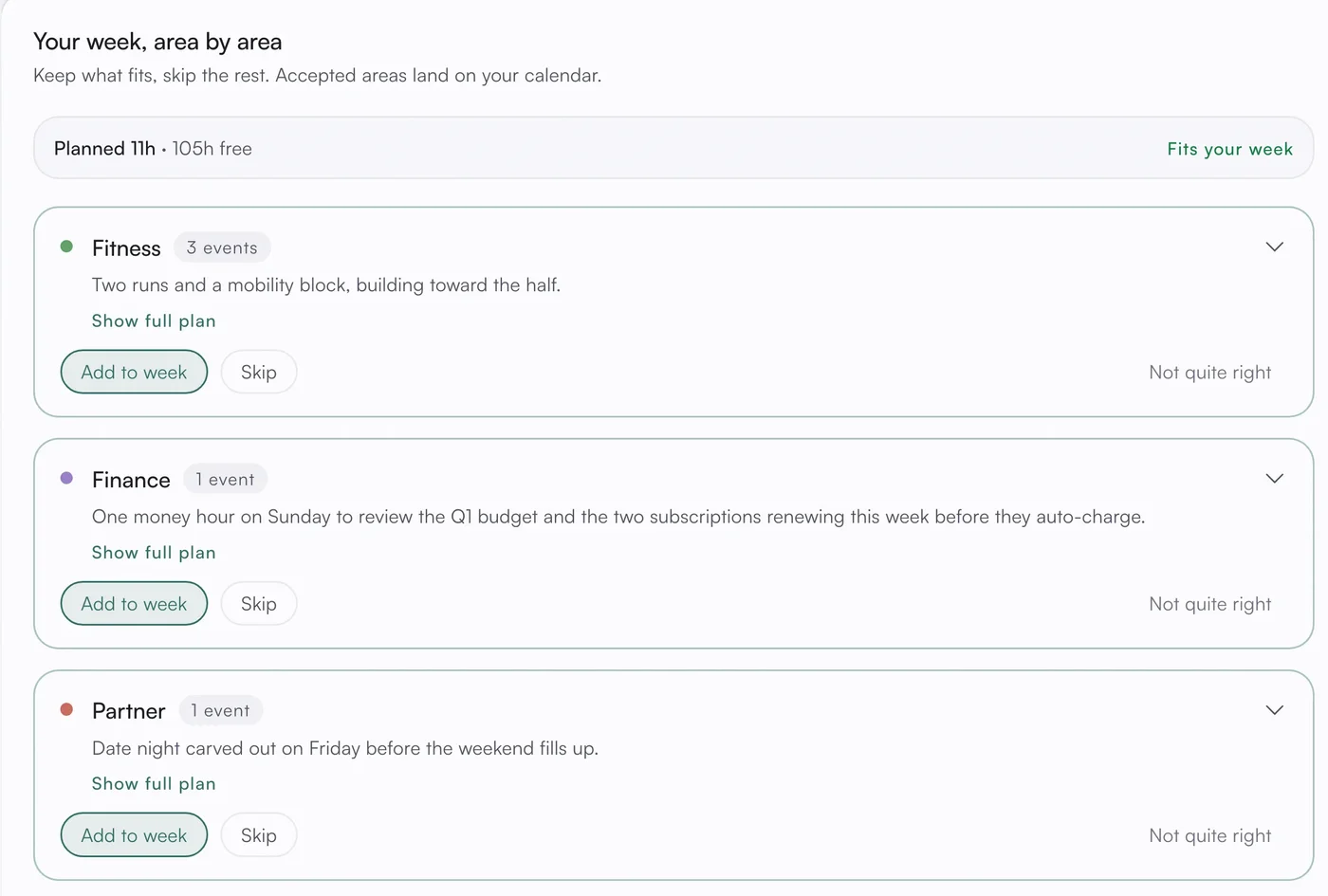
asambl's Sunday planning pass: the week's priorities chosen area by area, with work, health and relationships each getting a deliberate place before Monday.
The Sunday pass: the week chosen, area by area

Keeping the Sunday Scaries out of it

The Sunday-evening dread is real, and planning has a complicated relationship with it. Done right, the ritual reduces the dread, because most of the Scaries is unnamed uncertainty, and thirty minutes of naming (this is what the week holds, this is Monday's first move) converts the fog into a shape. People who plan on Sundays mostly report calmer Sunday nights, not worse ones.

Done wrong, the ritual becomes the dread: Sunday quietly turns into an unpaid workday, the planning expands to fill the evening, and the weekend loses its last hours to a spreadsheet. The guards are simple. Cap it at thirty minutes with a real timer. Plan the week; never start executing it (no “quickly clearing” the inbox, no first draft of the deck). Prefer late afternoon to late evening. And watch the honest signal: if Sundays feel worse since you started, the ritual is the wrong shape or the wrong day, and Friday afternoon is waiting.

Where asambl fits

Sunday is when most asambl weeks get approved. The draft is waiting, built from your priorities and what carried over, so the thirty minutes goes on the decisions: keep, change, or drop each block, name Monday's first move, and make sure the one enjoyable thing survived. The ritual stays yours; the blank page is what disappears.

Plan the week before it starts

A short prompt every Sunday to help you decide what next week is actually for, plus the occasional essay. No product pitch, unsubscribe any time.